Terry Melcher’s no-show at Spahn Ranch
Once Upon a Time in HollywoodTerry Melcher’s no-show at Spahn Ranch transformed a long-awaited music audition into a test of Charles Manson’s authority. The Family had prepared for Melcher’s visit as though it might open the door to a musical future; when he failed to arrive, the empty appointment exposed both Manson’s hunger for recognition and the gap between that hunger and the ideals he preached.
The opportunity and its preparation
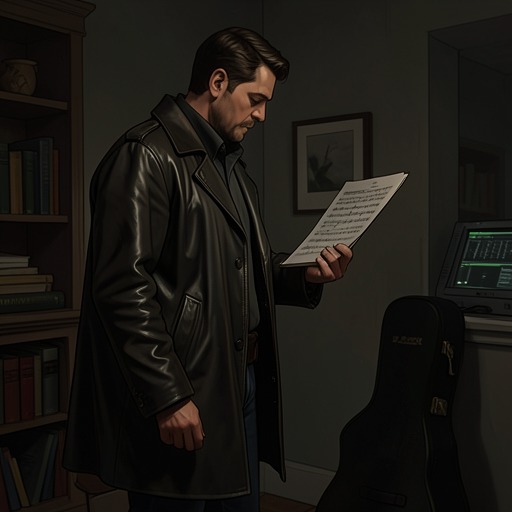
By February 8, 1969, most of Manson’s musical connections had faded. A possible meeting with Melcher remained: Melcher had previously said he would listen to Manson’s songs, although the two had lost contact. Their paths had once crossed through Dennis Wilson, but Manson had become unwelcome at Wilson’s home. One thread still seemed to link them: Manson’s song Cease to Exist had appeared on a new Beach Boys album without credit, and Melcher was among the few people who knew where the song originated. Manson could imagine that Melcher might now regard him as a composer worth recording.
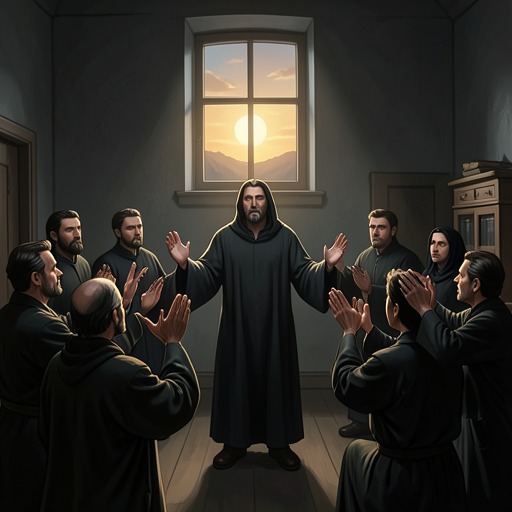
Melcher agreed to come to Spahn Ranch and listen. A date and time were set, the appointment was confirmed, and the people at the ranch organized a celebration around it. The Family decorated the place, practiced with background instruments, and arranged for half-naked women to harmonize and dance. Their preparations made the audition more than a private business meeting: the whole ranch was waiting for the promised visitor, and Manson had spent the week anticipating his chance to perform.
The surrounding soundscape was saturated with popular music. On the previous Friday, Brandy waited for Cliff Booth at his trailer while Robert Goulet sang MacArthur Park on The Hollywood Palace. The following morning, Cliff Booth drove along the Sunset Strip as KHJ disc jockey Robert W. Morgan greeted early listeners. These details locate Manson’s ambition in a city where songs traveled through television and radio into ordinary routines. Yet the music Manson hoped would carry him to an audience was not merely background: he wanted Melcher to hear him.
The missed appointment
Manson had reason to remember his earlier professional recording session as a failure of nerve. He had been unable to perform as he wished, and he did not forgive himself for it. This audition seemed to promise a reversal. On the day Melcher was expected, Manson felt calm and ready, confident in his music and his ability to perform it. The contrast sharpened the disappointment: the opportunity arrived, in Manson’s mind, at the very moment he was finally prepared to meet it.
The appointment was set for three-thirty. As that time passed, the minutes accumulated: three-forty, three-fifty, four o’clock, then four-ten, four-twenty, and four-thirty. Melcher did not come. The ranch’s elaborate preparations could not turn the absence into a performance or explain it away. Manson received word that Melcher had been busy and that the failure to appear was not meant as an insult. But no new date followed, and the two men no longer moved in the same circles. A postponement without a rescheduled meeting left Manson with no clear route back to the opportunity.
What the absence revealed
The missed audition hurt Manson personally and interrupted a performance he believed he was ready to give. It also compromised him in front of The Family. The others wanted the visit to go well, but they had not treated it as though their future depended on it. Manson’s visible anxiety disclosed how much he wanted the approval of a record producer—and how much he wanted fame, money, and recognition, desires he had taught the group to regard as shallow.
The difference between Manson’s investment and the group’s apparent detachment made the failure consequential. He had presented himself as a spiritual guide whose music would serve a purpose beyond personal celebrity. Now some members had their first reason to wonder whether he might instead be another aspiring musician with a guitar, trying to get on the radio. They had not previously understood how much rode on Melcher liking the music or enjoying the occasion. An uncertain business prospect had become a visible weakness in the leader’s carefully maintained image.
The episode also gives shape to a lesson Manson had taught his followers: plans might fail, and what was meant to happen would happen. At the ranch, however, his own distress sat uneasily beside that doctrine. The contradiction is not resolved by the no-show. Rather, the failed appointment lets the group see the private stakes behind the public teaching, while showing how fragile an authority can look when its bearer cannot absorb a disappointment without revealing how much he wanted the outcome.
From the ranch to Cielo Drive
With the promised meeting gone and no rescheduling in sight, Manson turned to the last possibility he could think of: going to Melcher’s home on Cielo Drive. He knew the house from earlier visits and parties. Appearing at the gate without an invitation would be poor form, but he could imagine that catching Melcher at home might revive the promise. The move was desperate, and Manson understood that it could be read as desperate. He hoped for a small act of persuasion, enough to make Melcher feel obliged to hear him; without such an attempt, he believed the connection might be lost altogether.
When Manson arrived, the gate stood open, as it did when deliveries were expected. He had anticipated being turned away at the call box beside the driveway; instead, he saw an open entrance. At the house, Sharon Tate put on a Paul Revere and the Raiders album, The Spirit of ’67, found among records left from Melcher’s time there with the band’s lead singer, Mark Lindsay. That later glimpse of the house’s musical residue joins the failed audition to the place where Manson tried to renew the connection, without changing the fact at the center of the episode: the opportunity at Spahn Ranch had already passed without Melcher hearing him.